I have been thinking about making this post for some time. In short, I want to try to lay out the connection between exhaustion that arises from the conditions one lives in and exhaustion from the culture that surrounds the subject/object/whatever; I am not good at that kind of philosophy. In short, summer is dog shit here. Absolutely mind-numbingly awful. It’s really hard to convey just how bad it is to people who haven’t lived through one.
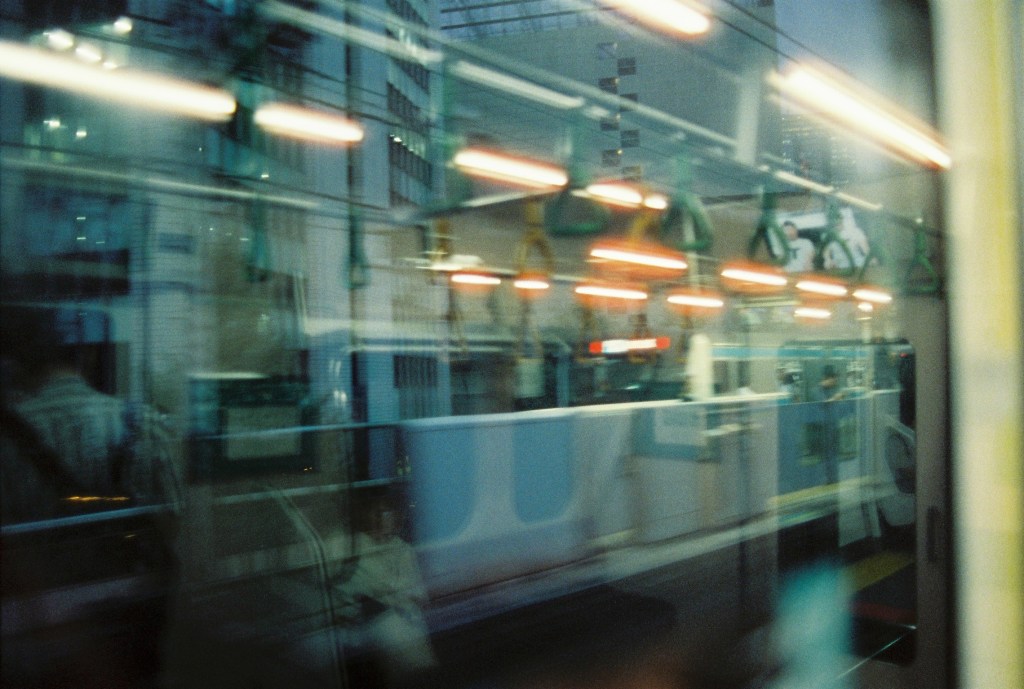
It’s not just the relentless heat and humidity. It’s the cultural aversion to sticking your head up and complaining that the trains are really fucking hot, and so half degree by half degree, the cookers turn on as the railway companies realise they can trade your misery for cost savings. Oh don’t forget my office building chiming in with the absurd proposal that during the summer months we would have to choose between 26 degree and 28 degree air conditioning for the environment. Forget about the fact that in winter these guys don’t mind cooking us, forget about the chance there might be some genuine psychopaths out there choosing the 28 degree (nuclear) option, forget about the fact that there is almost no environment to speak of in the amorphous concrete blob that is the worlds biggest city. Just be good boys and girls now and stew in your own sweat.
Naturally even the locals struggle. Anecdotally the populace is much more prone to aggression, poor behaviour and surliness during this season. Given that the death toll from air conditioner misuse (read: not using it at all, either out of genuine derangement or more tragically due to the costs incurred) already passed 2000 people nationwide by July this year, it’s not hard to understand why. How can you sleep in a hothouse where the ambient temperature at night is often in the low thirties? And yet suffer through it they do. Suffer through it I do. My suffering comes primarily from my wallet; it’s not cheap to run the aircon 24/7 for five months in a row. But also from an existential fear: what the fuck do we do when a strong earthquake hits and cuts power in the middle of summer? Scores die, surely.
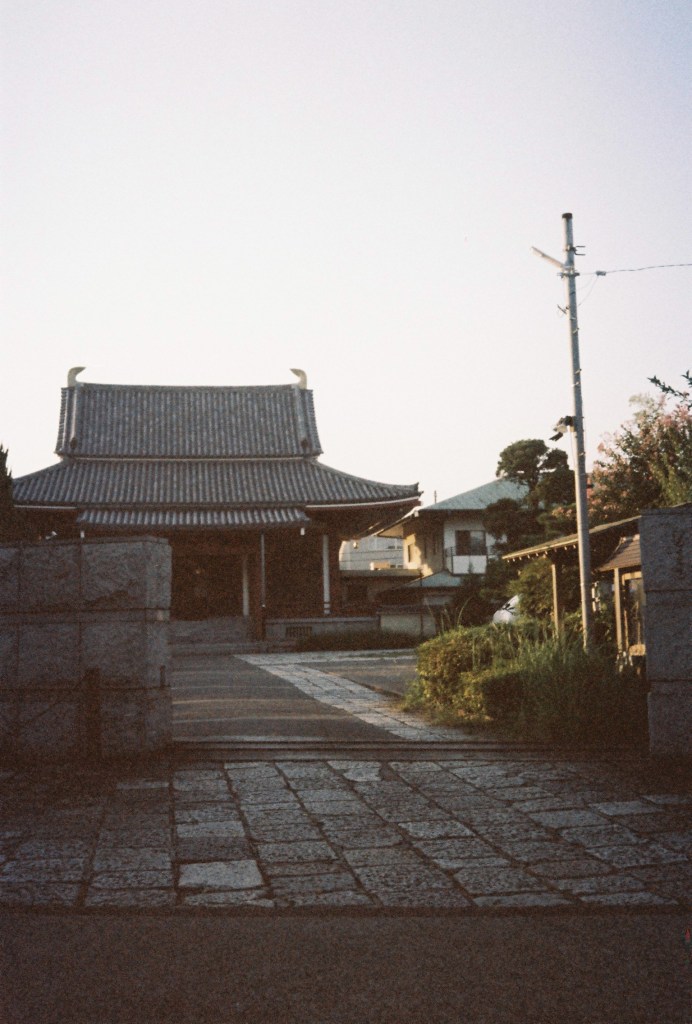
I think about how vernacular architecture has been replaced increasingly with admittedly more effective, but also more fragile systems à la glass towers cooled with industrial chillers. These are all well and good until the supporting systems collapse. Traditional Japanese architecture, on the other hand, allows for masses of ventilation, and is designed to keep much of the sunlight out in the hell season. The main issue with this is; especially with global warming accelerating the situation; is Tokyo simply too hot for these solutions? The answer is probably yes.
The city doesn’t help itself, at all. Take a look at Singapore, it’s decked in greenery, huge tropical trees leaning out over pavements and roadways, providing shade. Large green spaces and open areas that allow the sea breeze to blow in and through residential areas. Tokyo on the other hand has two or three trophy streets in the vein of Omotesando where trees are allowed to sprawl over the roadways, while everywhere else can at best hope for useless little shrubs, pruned to within an inch of their life, or more likely, bare, radiant concrete. Whatever little opposition there is to this kind of existence is stifled. The falling leave are an inconvenience you see. What if some branches fell off in a typhoon? (With the second comment made under the most horrendously ugly and slipshod tangle of power cables you’ve ever seen).
This brings me to the cultural aspect, which compounds the rage and despair in multiple ways. Years ago, one of my Japanese colleagues taught me the concept of hirame ningen, directly translated as flatfish humans; just like flatfish are only able to look up, the hirame ningen lives in perpetual obeisance and fear of a rather nebulous concept of higher authority. Just what this authority is doesn’t really matter, it’s the fact there are rules, or there might be rules, or there might be inconveniences caused that demand you repress all aspects of your humanity into a well behaved little cube. If you’ve lived here long enough, you’ll recognise the feeling inside yourself too: I’m not doing the prescribed action that is allowed to occur in this space. Am I in trouble?
This then slowly morphs into a society where all is controlled, willingly, by its own subjects. It self regulates. Risk becomes intolerable. What is the risk of a branch falling and injuring someone? Too high, cut the awful thing down. Meanwhile, in saner pastures, this is accepted as one of the many unfortunate facts of life, and the scales are weighted more towards the enjoyment and comfort of the populace rather than blind risk aversion. Once aware of this cultural leaning, you begin to see it everywhere. The endless metal rails along roads preventing the heinous act of crossing where there isn’t a light… actually, the massive overuse of traffic lights on low-traffic intersections where you’re kept waiting for nothing. Concreting over rivers, building sea walls where no one actually lives, and so on and so on. To make a crude comparison; if the European attitude might be to engineer with risk factors in mind, the Japanese solution is to engineer such that said risks (should) never eventuate in the first place.
I think you need to experience risk, chance and danger if you are to have a modicum of awareness and common sense. I encourage you to try to walk in a straight line through a busy train station and see just how many people with their faces smeared into their phones only notice you at the last minute, or even crash into you. Everything is taken care of, so why would you pay attention? Someone else will move out the of way. Why risk making a scene by telling the midwit who nearly walked into an oncoming bus to get off their phone? The virtuous cycle of getting called out for being a moron and learning from the experience doesn’t really happen here. Regardless, I have taken to simply walking into these people. Sorry, your fault.
The summer is essentially over now. I turned off my airconditioner for the the first time in months last week. I’ll start to feel better soon and begin enjoying life in Tokyo once again. There is a lot to celebrate about living in Japan, and I have to say I’m grateful for the opportunities and encounters I’ve experienced. But with every summer that passes, the scales tip towards me leaving. I can’t handle it. I’m just lucky enough to have the opportunity to get out of here. Though I do wonder why more Japanese people aren’t moving to Sapporo. It’s probably too risky.
 It is not everything!